
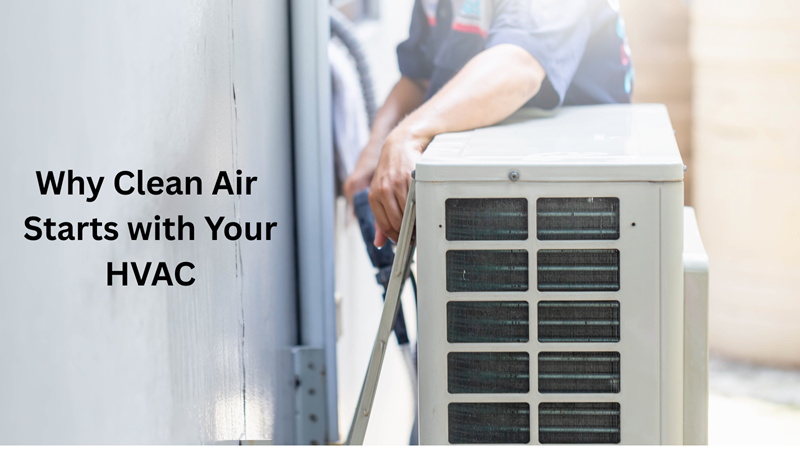
Why Clean Air Starts with Your HVAC
Your HVAC system plays a bigger role in your health than you might think. Beyond keeping your home comfortable, it directly affects the quality of the air you breathe every day.
Clean Air Starts with Your HVAC System
Your HVAC system isn’t just about heating and cooling; it’s the lungs of your house. Every time it runs, it pulls air in, filters it, and pushes it back into every room. The condition of your system decides whether you’re breathing crisp, clean air or a cocktail of dust, allergens, and pollutants.
Even if you clean your home regularly, without a healthy HVAC system, all that air still recycles through the same pathways. If the system is clogged, dirty, or poorly maintained, it’s like forcing your home to breathe through a straw lined with dust. That makes regular steps toward cleaning air indoors essential.
Pollutants like smoke, pet dander, or cleaning product fumes don’t just vanish; they cycle through again and again. The state of your filters, ducts, and coils determines whether contaminants are removed or spread further. That’s why people often notice stale air, dust that quickly returns after cleaning, or lingering odors when their HVAC is overdue for maintenance. Keeping up with a clean HVAC system is one of the most reliable ways to purify air in home spaces.
Dirty Air Ducts Threaten Clean Air
Dirty ducts act like storage lockers for everything floating in your air, dust, pollen, mold spores, pet hair, even microscopic pest droppings. When the system kicks on, those particles don’t just sit there. They hitch a ride back into the air you’re breathing, landing on your furniture, floors, and lungs instead of helping you maintain clean air ducts.
Beyond the obvious allergy triggers, dirty ducts also restrict airflow, making your HVAC work harder and less efficient at trapping new debris. That means more pollutants bypass the filter and end up in your lungs. In homes with pets or moisture issues, ducts can become breeding grounds for bacteria and mold spores. These conditions often lead to musty odors, lingering “stale” air, more frequent allergies, or visible dust settling right after the HVAC runs. The difference between dirty and clean HVAC vents can be the difference between constant sneezing or being able to comfortably breathe clean air.
How To Clean Air Ducts?
True air duct cleaning is not a DIY job, you need specialized vacuums and agitation tools to actually remove buildup. That’s why it’s best left to NADCA–certified professionals (the National Air Duct Cleaners Association sets quality standards). A safe, effective service should use high– powered vacuums or negative air machines that vent debris outside the home, not back into it. Flexible ducts need extra care, since rough brushing can damage them and release insulation fibers.
Skip the gimmicks, sprays, “mold bombs,” or chemical sealants rarely solve the root problem and can introduce unnecessary chemicals. Instead, ask for before–and–after photos so you
know exactly what was removed. Professional cleaning ensures you end up with truly clean air ducts, which is far more effective at cleaning air than temporary quick fixes. For a DIY step between professional cleanings, keep return vents dust–free, replace filters regularly, vacuum vent covers, and seal duct leaks so new debris can’t enter. These habits keep your system closer to a consistently clean HVAC setup.
How Often Should You Clean HVAC Ducts?
For most homes, every 3–5 years is a smart baseline for duct cleaning. Certain conditions can shorten that timeline, homes with pets, smokers, or residents with allergies may need cleaning every 2 years, and households with severe asthma may even benefit from annual service. After major remodeling or construction, cleaning should be scheduled right away to remove drywall and sawdust.
Still, the best indicator isn’t the calendar but the symptoms. If you see visible dust puffing from vents, dark streaks around registers, smell mustiness, or notice uneven airflow, it’s a clear sign your ducts may need attention sooner. These signs point to a system in need of a reset, bringing it back to clean HVAC vents that help consistently purify air in home environments.
How To Clean Air Conditioner Filter?
Most AC filters are designed to be replaced, not washed. Turn off the unit, remove the filter, and check whether it’s disposable or reusable. Disposable filters should be replaced every 1–3
months; washing them ruins their ability to trap particles. Reusable filters can be vacuumed with a soft brush, washed gently with lukewarm water and mild soap (never harsh chemicals), and dried completely before reinstalling to avoid mold.
months; washing them ruins their ability to trap particles. Reusable filters can be vacuumed with a soft brush, washed gently with lukewarm water and mild soap (never harsh chemicals), and dried completely before reinstalling to avoid mold.
During heavy cooling season, it’s best to inspect reusable filters monthly. Waiting until the air feels weaker or the filter looks gray means the system has already been struggling. Staying
consistent keeps you closer to a clean HVAC filter, which directly contributes to fresher, clean air throughout the house.
How To Clean Furnace Filter?
Furnace filters follow the same principle as AC filters, but airflow direction is key, the arrows on the frame must point toward the blower motor, with a tight seal around the slot so dust can’t bypass filtration. Always switch off the furnace before removing the filter. If it’s disposable, replace it rather than trying to vacuum or rinse, since cleaning reduces efficiency. If it’s reusable, gently vacuum and wash with mild soap, making sure it dries completely, winter furnaces already add humidity, and a damp filter can quickly turn into a mold incubator. During heating season, inspect monthly and replace every 1–3 months as needed. Regular swaps are the simplest way to maintain a clean HVAC filter and keep your home’s system effective at cleaning air.
How To Clean Heat Pump Filter?
Heat pumps work year–round, so their filters see double duty, gathering both summer pollen and winter dust, which can create stubborn buildup. Always shut off the power before removing the filter from the indoor air handler. Vacuum the surface first to reduce clogging, then wash with water and mild soap. Let it dry thoroughly, sunlight helps with natural disinfection, while reinstalling it damp can lead to mold growth within days. Because heat pumps operate nonstop for both heating and cooling, inspect the filter monthly and clean or replace it every 30–60 days to keep airflow strong and air clean. Keeping these filters fresh is one of the most reliable ways to purify air in home spaces and guarantee a consistently clean HVAC filter.
Easy HVAC Maintenance Tips to Purify Air in Home
Cleaning is only part of the equation. Think of your HVAC as a whole ecosystem, filters and ducts matter, but airflow, humidity balance, and component cleanliness all shape whether your home feels like fresh mountain air or a dusty basement. Upgrading to a higher–MERV filter (11– 13) captures finer particles like pollen and smoke, but only if your system can handle the airflow. Sealing duct leaks keeps contaminants from being pulled in from attics or crawl spaces, while proper humidity control (35–50%) prevents both dryness and mold growth. UV lamps installed inside ductwork can neutralize mold spores and bacteria before they circulate, and cleaning the evaporator coil removes hidden biofilm that causes odors. Seasonal tune–ups tie it all together, catching issues like refrigerant leaks, mold, or failing fans before they compromise both air quality and comfort. These small, consistent steps ensure a clean HVAC, healthier clean air ducts, and ultimately help purify air in home environments with long–lasting results
Thank you for this great information