What’s Going On With Your Home’s Walls?
It’s not wise to ignore problems with your home’s walls. From structural issues to toxic substances, there are many hazards that could be hidden in your walls. By knowing the danger signs and acting upon them, you can keep you and your household safe. Below are just some of the problems to look out for and how to fix them.
What’s Going On With Your Home’s Walls?
Mold
Mold is a fungus that typically thrives in warm, damp, dark conditions. This is why it grows so well inside homes – particularly homes that are humid or that have damp problems.
Mold releases spores into the air which can cause respiratory issues if continuously breathed in. This is why it’s important to get rid of mold in your home as soon as you discover it.
There are many anti-mold products that you can spray onto your walls to get rid of mold, as well as mold removal companies that you can hire. However, to stop mold continuously growing back, it’s a good idea to identify the source.
If you live in a humid climate, a dehumidifier could be necessary for removing excess moisture from the air. Making sure that rooms like kitchens and bathrooms are well ventilated can meanwhile prevent mold growing as a result of condensation (extractor fans are the best option). Finally, when it comes to unusual concentrations of mold in specific areas, consider whether a leak could be to blame. Unless you patch up this leak, the mold will keep coming back.
Bubbling
If plaster on your walls is bubbling, this could also be caused by moisture. It is likely that the wall itself is damp. This moisture has reached the surface of the brickwork/wood and has now got nowhere to go because of the plaster in the way – hence why the plaster is bubbling. Look into commercial plastering to fix these issues.
It is likely that there is a leak in the wall. This could be a plumbing leak or a rainwater leak – a leak detection specialist will be able to tell you which. Of course, a wall can also get wet from the outside if something is spilled on it, it is near a sink or there is too much condensation. Rule these issues out before looking for a leak.
Alligatoring
Is the paint on your walls cracking and peeling in a geometric pattern that resembles an alligator’s scales? This problem is sometimes referred to as ‘alligatoring’ and is often a telltale sign that there is lead paint on your walls.
Lead paint is toxic and particularly dangerous when it is flaking. A pet or young child could put a flake in their mouth, while lead paint dust could even get into the air. It is worth hiring a professional company to remove your lead paint before applying a new coat of non-lead paint.
Cracks
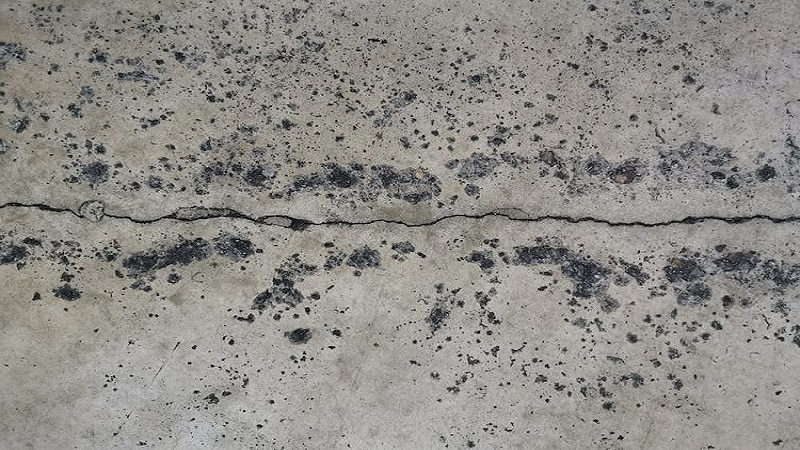
Walls naturally develop cracks over time as a result of changes in temperature. These are usually tiny uneven cracks and are of no real concern. Large cracks that move in a straight line or stepped pattern are more of a danger. They are a sign that your walls are moving and potentially falling apart.
While it is easy to seal up cracks, you should also try to tackle the root cause of the problem – otherwise these cracks could reappear. Subsidence could be causing your walls to move, and repairing the foundation of your home may therefore be necessary. Alternatively, a poorly fitted door or window could be causing problems.
Scratching noises
If you hear scratching noises coming from inside your walls, it is likely that you have a pest problem. Mice and rats are the two biggest culprits. These rodents may eventually get into your home if you don’t get rid of them. Alternatively, they may stay in your walls and cause damage to wiring or insulation.
A pest control service will be able to tell you what is causing the scratching. From here, you can then explore ways to get rid of the pests from your home.