
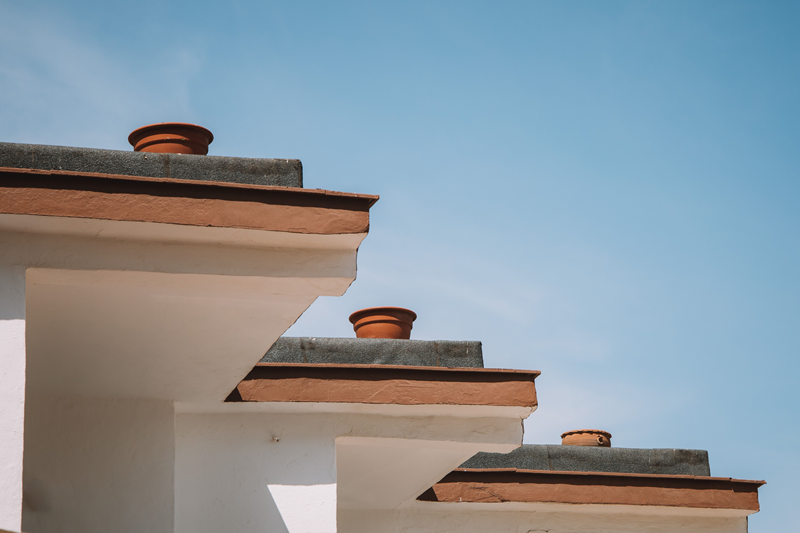
Flat Roofs Look Simple From the Ground — Why the Details Underneath Separate Good Work From Great
Most people picture a roofer balanced on a steep pitch, hammer in hand, shingles fanned out below. That image rarely matches the reality of low-slope and flat roofing, a specialized corner of the trade that handles commercial buildings, additions, porches, and modern flat-roof home designs. The work looks deceptively simple from street level, a flat expanse with no dramatic angles or visible seams. Underneath that plain surface, though, lies one of the most technically demanding disciplines in roofing, where the margin between adequate work and excellent work often comes down to details invisible to anyone standing on the ground.
A Different Set of Physics
Sloped roofs rely on gravity to shed water quickly. Flat and low-slope systems do not have that luxury. Water sits, moves slowly, and finds every imperfection in a membrane before it eventually drains. This changes the entire calculus of the work. A roofer trained on asphalt shingles cannot simply apply that knowledge to a low-slope commercial building and expect the same results. The specialists who work in this field spend years learning how water behaves when it has nowhere urgent to go, and how tapered insulation, cricket systems, and drain placement all work together to move it off the surface before it causes damage. Excellent work in this sub-discipline starts with understanding drainage as a system, not an afterthought.
Seams Are Where Reputations Are Made
On a sloped roof, a shingle overlap does most of the work of keeping water out. On a flat roof, the membrane itself is the primary barrier, and every seam, penetration, and transition point is a potential failure. Whether the material is TPO, EPDM, or a modified bitumen system, the heat-welding or adhesion process at each seam determines how long that roof will last. Adequate technicians can lay a membrane that looks finished. Skilled specialists know how to test every seam, adjust weld temperature for weather conditions, and recognize when a corner detail needs an extra layer of reinforcement rather than a quick pass with a heat gun. The difference rarely shows up on installation day. It shows up three winters later, when one roof is still watertight and another has started to fail at the exact points a rushed crew treated as routine.
This is also where the connection to everyday roofing service becomes clear. A homeowner calling for roof repair on a flat porch cover or a low-slope addition often assumes the fix is straightforward, a patch here, a bead of sealant there. In practice, a specialist has to first determine whether the visible leak is even the actual entry point, since water on a flat roof can travel laterally under the membrane before it drips through the ceiling somewhere else entirely. Diagnosing that correctly, rather than chasing the symptom, is one of the clearest markers of expertise in this part of the trade.
Materials That Reward Precision
Low-slope roofing has evolved considerably from the tar-and-gravel systems of past decades. Modern single-ply membranes are lighter, more reflective, and often engineered to meet energy efficiency standards that reduce cooling costs in the summer months. Energy Star maintains criteria for reflective roofing products, and specialists who work in this field pay close attention to how a membrane’s solar reflectance holds up over time, since a roof that starts reflective but degrades quickly offers little long-term benefit to the building owner. Choosing the right material for a given climate, slope, and building use is itself a skill, and installing that material correctly is another skill entirely. A membrane rated for decades of performance will not deliver on that promise if it is stretched too tight, welded at the wrong temperature, or fastened with the wrong pattern for the expected wind uplift in that region.
Small Crews, Deep Specialization
Because low-slope and flat roofing require such specific training, the crews who do this work tend to be smaller and more tightly specialized than a general roofing team. Many roofers who install shingles daily will subcontract or refer out flat roof projects rather than take them on directly, recognizing that the skill set does not transfer automatically. Within the trade, low-slope specialists often describe their work as closer to waterproofing engineering than traditional carpentry. They read manufacturer specifications closely, they understand how insulation boards interact with vapor barriers, and they treat flashing details around HVAC curbs, skylights, and parapet walls as the most important part of the job rather than a finishing touch.
That specialization also shapes how these crews train new members. Rather than learning by mimicking a broad set of general roofing tasks, apprentices in this sub-discipline often spend extended time on a single skill, such as heat welding, before being allowed to work on a live seam unsupervised. The learning curve is steeper, but it produces technicians who understand exactly why each step matters rather than simply following a routine.
Why the Difference Matters to Building Owners
For the property owner, the practical impact of this craftsmanship gap is significant. A well-installed flat roof, maintained properly, can last well beyond its rated lifespan with minimal intervention. A poorly detailed one can develop leaks within a few years, often in ways that are difficult to trace because water has migrated before revealing itself. The upfront cost difference between adequate and excellent low-slope work is often modest compared to the long-term savings in avoided repairs, interior damage, and premature replacement. Building owners who take the time to ask about seam testing, drainage design, and manufacturer certification are, in effect, screening for the specialists who treat this discipline with the seriousness it requires.
Flat and low-slope roofing will likely never carry the visual drama of a steep, dramatically pitched roofline, and that is precisely why the craftsmanship behind it deserves more attention than it typically receives. The specialists who excel in this niche are solving quiet engineering problems every day, out of sight, so that the buildings above stay dry for decades. Recognizing that expertise, and the training it takes to develop it, gives a clearer picture of what separates a roof that simply gets installed from one that is genuinely built to last.
Feature Image Source: Photo by Joaquin Carfagna via Pexels


